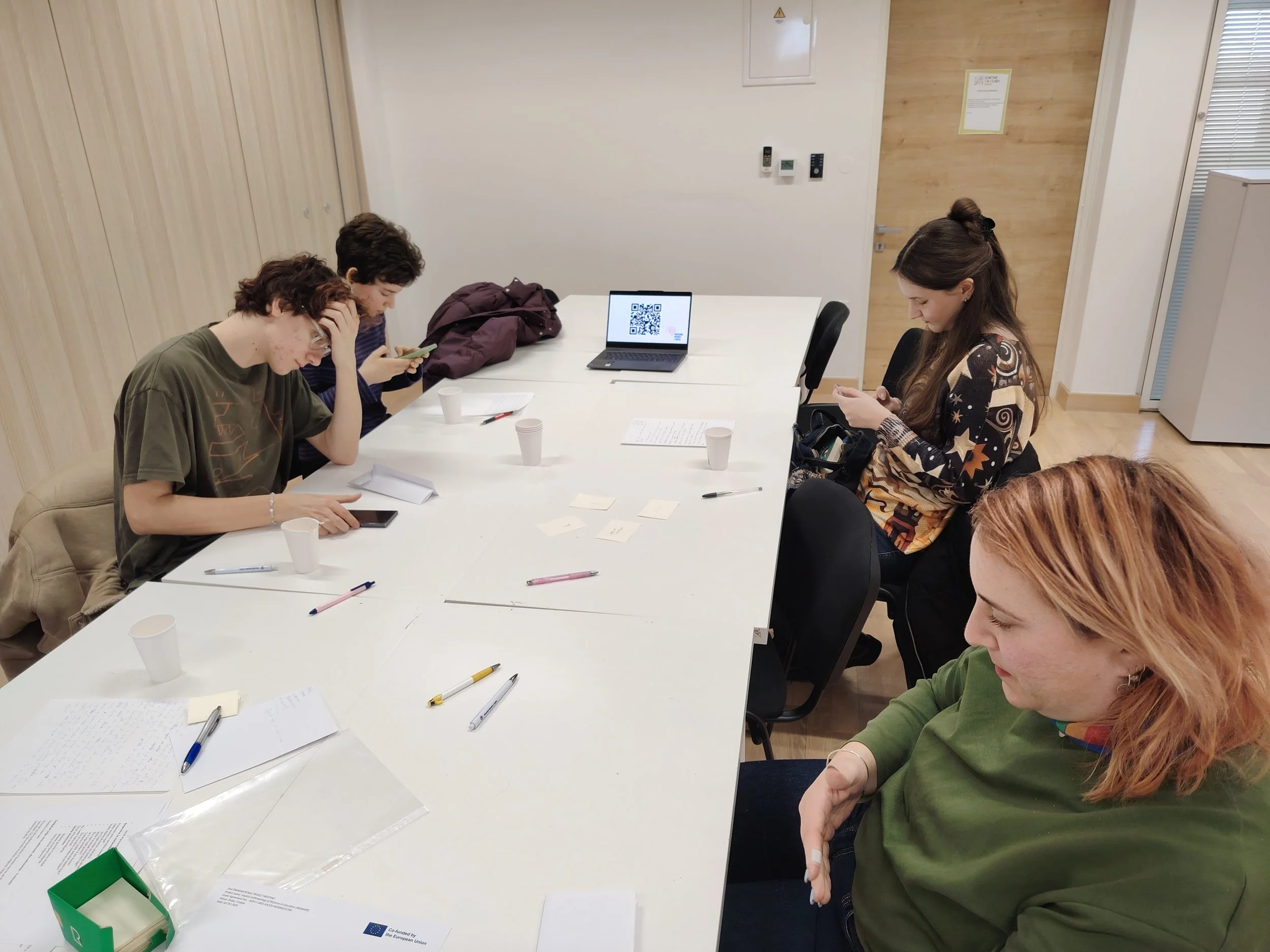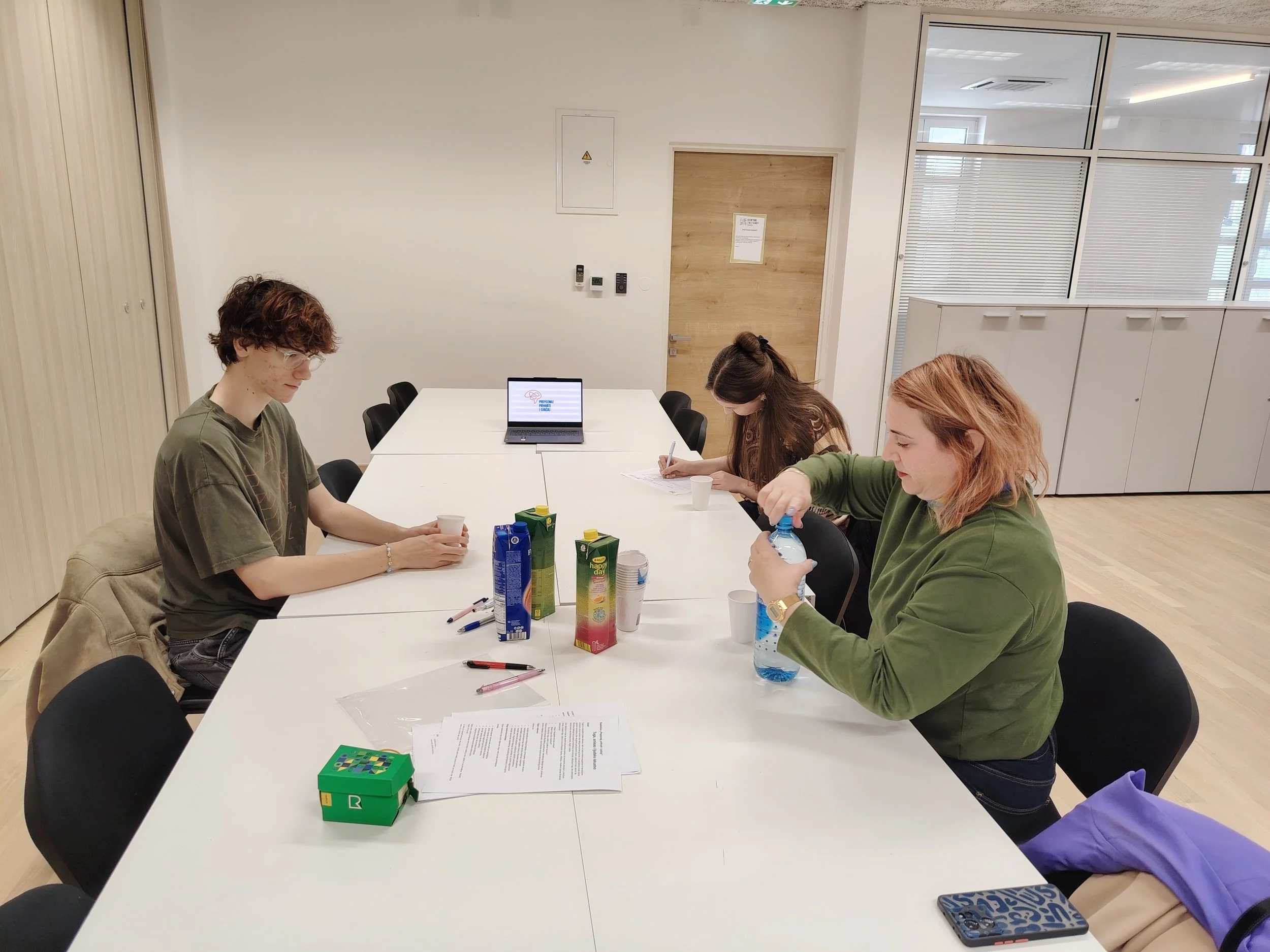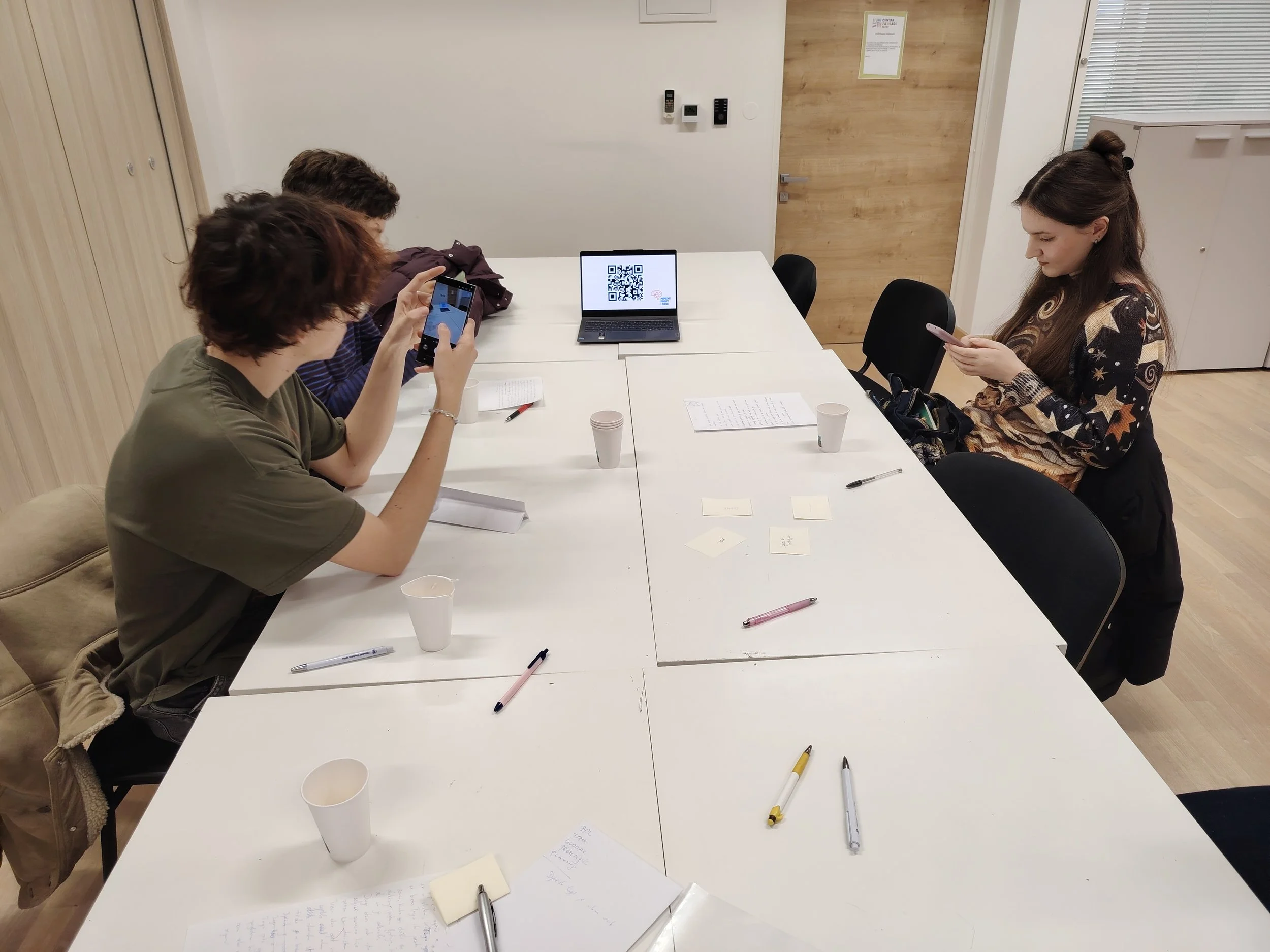
On Saturday, February 27, 2026, we held a workshop on mental health and critical thinking at the Youth Center Zadar as part of the project “Recognize, Accept, and Strengthen!”
The workshop titled “Sadness, Meaning, and the Human Experience” brought together high school students who, as they admitted themselves, were initially a bit skeptical. They only knew the workshop’s title and wondered if it would be a heavy and emotional session.
But the workshop surprised them.
From the very beginning, it was clear that this was not therapy nor a discussion of personal experiences. We did not delve into pathology or diagnostics. Instead, we approached sadness from a philosophical perspective as part of the universal human experience. Through interactive activities and guided discussions, the young participants reflected on questions such as:
What does sadness tell us?
Is sadness a negative emotion?
Can an unpleasant emotion have value?
One of the key insights we reached together was that sadness, like no other emotion, is never negative. Some emotions can be uncomfortable, but that does not mean they are bad. Sadness, like every other emotion, communicates something to us. It tells us about our current state, what matters to us, what we have lost, or what we are trying to understand. It is not there to hinder us but to help us if we know how to listen. A particularly interesting moment occurred at the end of the workshop when we asked the high school students what they had expected at the beginning. One student said, “I definitely did not expect us to talk about sadness as a friend.” This was one of the important shifts in thinking. Sadness can be our ally. It can help us process situations and events in life in a healthy way. The goal of the workshop was not to encourage sadness nor suggest that we must be sad or cry. The message was different. Emotions should not be suppressed but understood. The students especially enjoyed activities involving discussion and Socratic dialogue. Through open questions and exchanging opinions, they practiced critical thinking and reflected on mental health topics without simple, black-and-white answers. We also touched on the important question of how to listen to others when they are sad and how to support them without judgment or trying to “fix” their emotions. The workshop demonstrated how ready and capable young people are to engage in deep and meaningful reflection when provided with a safe and encouraging space. The project “Recognize, Accept, and Strengthen!” continues with activities that empower young people to better understand themselves and others because understanding is the first step toward strengthening.